Case Studies

Proven results

Real experiences demonstrating our expertise in geotechnical solutions — and the risks of not having them.

Projects & Publications

Our cases

AI-Readable Cognitive Architecture for Engineering Projects
2025 Technology & Innovation

From Challenge to Opportunity: An AI-Readable Cognitive Architecture for Engineering Projects

Case study on an AI-readable cognitive architecture that transforms documentary challenges into efficiency opportunities in civil and geotechnical engineering projects.

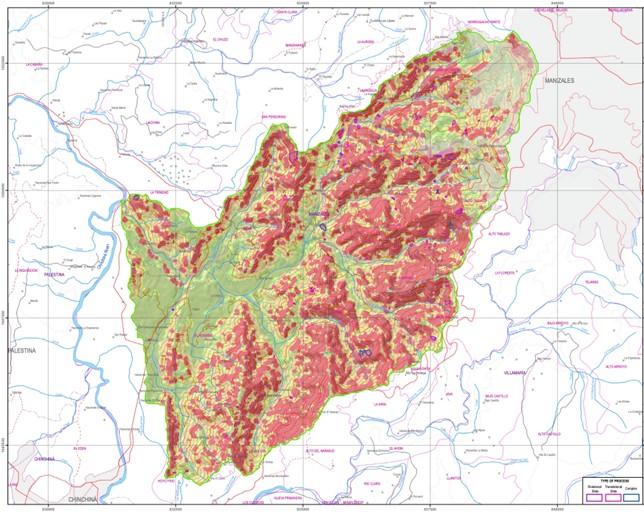
Integrated annual probability of failure map — Landslide hazard zoning
2025 Hazard Zoning

Landslide Hazard Zoning — ALICE® Methodology

Application of physically based methods (PBM) for catchment-scale landslide hazard zoning, integrating hydrological analysis and 2D slope stability.

Coming Soon Railway Infrastructure

Stability Study in Andean Railway Tunnel

Comprehensive geotechnical analysis for a railway tunnel in complex Andean geological conditions, including numerical modeling and design recommendations.

Coming Soon
Coming Soon Renewable Energy

Foundations for Wind Farm in Seismic Zone

Design and supervision of deep foundations for wind turbines in a high seismic activity zone, considering dynamic loads and soil conditions.

Coming Soon
Structural Safety

Impact of absent
geotechnical studies

The absence or deficiency of geotechnical studies in Colombian residential projects has proven to have a high negative impact, resulting in loss of life, multi-million-dollar economic losses, and erosion of public trust in the construction sector.

Case 1: Collapse of Edificio Space — Medellín, 2013

In October 2013, tower 6 of this residential complex collapsed suddenly, causing 11 deaths. Investigations revealed foundation problems associated with inadequate implementation of the initial geotechnical recommendations. The soil study had recommended foundation piles of a certain diameter and depth, but these specifications were not fully respected during construction, generating differential settlements that could have been avoided.

Case 2: Collapse of Portales de Blas de Lezo II — Cartagena, 2017

In April 2017, this residential building under construction collapsed abruptly, leaving 21 people dead. Investigations revealed the building was being erected without a construction permit and, most critically, without an adequate soil study prior to construction. Neighbors reported problems from the early stages: the fill compaction was deficient and early cracks appeared — clear signs of ignored geotechnical problems.

Case 3: Collapse of Conjunto Residencial Privilegios — Barranquilla, 2024

In November 2024, the south tower of Block 4 of this complex collapsed suddenly. Post-collapse studies revealed the block was founded on highly expansive clays, extremely sensitive to moisture changes. This soil type experiences significant strength loss and volumetric changes with varying water content. Intense rainfall in the preceding weeks increased subsoil saturation, weakening the foundation base.

Lessons learned
  • Prior studies are essential: every project, regardless of size, must have a thorough geotechnical study before designing and building.
  • NSR-10 compliance: Colombia's seismic-resistant construction codes exist to prevent tragedies. Skipping these requirements carries enormous risk.
  • Follow recommendations on site: having a soil study is only the first step; equally important is respecting its specifications during construction.
  • Appropriate design in difficult ground: for buildings on expansive clays, fills or slopes, special engineering solutions are essential.
  • Prevention culture: it is urgent to reinforce oversight and compliance with the obligation to conduct geotechnical studies for all civil works.

Conclusion: Prevention through complete, reliable soil studies is an investment in safe lives and resilient cities. Learning from past mistakes is the path to not repeating them in the future.

NSR-10 · Soil Studies

Why commission
a soil study
in Colombia?

Soil studies are fundamental to guaranteeing the safety and stability of any construction. Below we answer the most frequently asked questions on this topic.

What is a soil study or geotechnical study per NSR-10?

A soil or geotechnical study analyzes ground strength and behavior to define safe foundations. NSR-10 (Title H) requires it to design correctly and avoid cracks or collapses that could result in loss of your home or assets.

Is a soil study mandatory in Colombia for 1- or 2-story houses per NSR-10 Title E?

For 1- or 2-story houses, NSR-10 (Title E) allows simplifications but still requires ground investigation. While the law does not always mandate a formal study, the risk of failure and financial losses remains real if you build without proper investigation.

What risks arise when building without a soil study in Colombia?

Without a geotechnical study you may experience settlements, cracking, tilting and even collapse during an earthquake. Entire residential complexes have been evacuated in Colombia due to poorly evaluated soils. The money "saved" is multiplied in repair costs.

How much does a soil study cost in Colombia and why is it worthwhile?

The cost depends on lot size, access, number of borings and laboratory tests. There is no single fixed fee. A good study can save you millions compared to a foundation repair or demolition.

At what project stage should the geotechnical study be done per NSR-10 Title H?

NSR-10 requires ground characterization from the start (Titles A and H). The study must be completed before structural and foundation design. If done after construction, only repair, reinforcement or demolition options remain — all at high cost.

What should a good geotechnical study include per NSR-10 Title H?

Per NSR-10 (Title H), a serious study includes borings, trial pits, laboratory testing, groundwater level location, soil profile type, and foundation and excavation recommendations. Without these, structural design is based on assumptions.

Can I use my neighbor's soil study to build on the adjacent lot?

Even if a neighbor has a study, their soil may differ due to fills, cuts or previous construction. NSR-10 requires the study to represent your specific construction unit. Using the adjacent one to "save money" can lead to serious failures.

In which Colombian cities is it riskiest to build without a soil study?

Cities like Bogotá, Medellín, Cali, Bucaramanga, Pasto or Manizales — in fact the entire country — combine seismic hazard and complex soils. But even in "quiet" areas there are fills, unstable slopes or hazards like rivers and streams. The risk isn't just earthquakes; bad ground or poor siting matters too.

Need a
geotechnical study
for your project?

info@gqs.com.co